Showing posts with label Vancouver. Show all posts

Sunday, July 24, 2022

Morrison Steel & Wire Company

Morrison Steel and Wire Company limited, was founded by Kenneth John Morrison (1866-1915) 
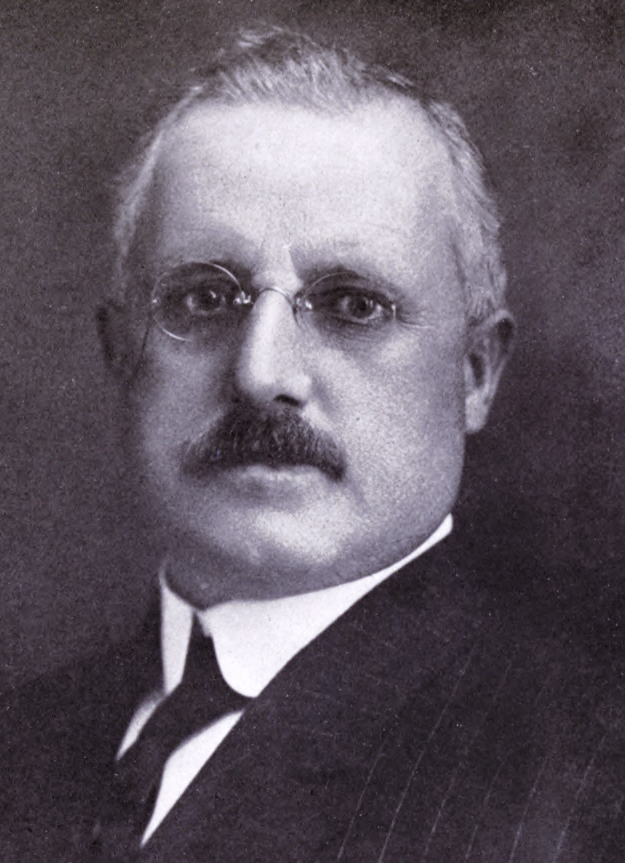
 

  Sadly he was killed with the sinking of the Lusitania in 1915 , Some more information about him here and here.  A more detailed look at K.J. Morrison,  and the early days of Morrison Steel & Wire Co., can be found at Robert Moen's excellant blog about the West End of Vancouver

I primarily posted this post to look at the history of the company when it moved to Granville Island in 1919. A complex journey it has been, still many unknowns. 

But here is a first go...

After K.J. Morrison's abrupt death. Nova Scotian, Henry Havelock McDougall,( 1866-1959 ), appears to have bought company after Morrison's passing. He married to Effie Putnam,( 1868 - 1955 ) in 1895.

Frequently H.H. Mcdougall is mentioned as Havelock McDougall, just to add to the confusion. Havelock had at leat two brothers John Currie McDougall ( 1859 - 1923 Victoria, B.C. ) and Adams McDougall. The following is from the The Daily Colonist, after H.H. McDougall's brother passed away in Victoria.


Transcribed here:   The Daily Colonist,  23 October 1923,  page 5

LATE CAPT. McDOUGALL WELL-KNOWN MARINER
Deceased Was Son of Prominent Ship Builder of Nova Scotia In Days Of Salling Vessels


Captain J. C. McDougall. whose death took place here recently was son of the late Hon. William McDougall. of Maitland, Hants County, Nova Scotia, who at one time was one of the largest shipbuilders in that locality. Captain McDougall, at the time of his demise was Federal inspector of weights and measures for Vancouver Island, and previous to that was a successful master mariner for some years, sailing  ships built by his father, amongst the number being the Hecla and Launberga. He is survived by his widow, residing here on Irving Road, and one son Mr. Fred McDougall, in Detroit, and five daughters. Mrs. Elliott and Mrs. Jarvis, of Edmonton; Mrs. Mckeddie, of Vanwort, Ohio; Miss Bessie McDougall, of Vancouver, and Miss Doris, of this city, besides four grandchildren and two brothers, Mr. Havelock McDougall, owner and proprietor of the Morrison Steel Works, Vancouver. And Mr Adams McDougall, of Halifax. N.S., provincial inspector of hulls.
  [ Capt. John Currie McDougall was married in 1885 to Margaret "Maggie" Douglas

 Bess McDougall married in 1928 Charles Stewart (Stuart) Lyons( 1865 - 1949 ) ]

Havelock McDougall, is variously listed as a manager, owner, president in the directories, he was an accountant. By 1918  Frank Wilkinson is involved as a managing director; he also had his own company Wilkinson Steel Company Limited, and was involved with U.S. Steel; all three companies used the same office address 846 Beach Avenue, Vancouver.  Frank Wilkinson (1873 - 1949 ) was married to Alice Mary Baker,( 1873 - 1949 ), he would go on to build a large steel distribution company, which was sold in 2013 to  Samuel,Son & Co.   Wilkinson Steel, used many buildings, around Vancouver, and B.C.; one of which is at 190 West 2nd Avenue Today the home of the CITY TV Station.
 

 Frank Wilkinson

 Photo and the following from:  Who's Who in Canada: An Illustrated Biographical Record of men..., Volume 14.
Wilkinson, Frank---- Managing director, Wilkinson & Co., Limited, Steel and Wire Merchants, established 1910, 846 Beach Avenue, Vancouver, B.C. Director of the Morrison Steel & Wire Co., Vancouver, B.C. Born England February 22nd, 1874, son of Joseph and Hannah Wilkinson. Educated in England. Came to Canada in 1893. Was engaged with B. and S.H. Thompson Co., Ltd., Montreal, as correspondent Secretary-Treasurer from 1893; Vice-President and General-Manager to 1910;  established present business 1910. Married Alice Mary Festling Baker, of Montreal, formerly of London, England; has one son and five daughters. Clubs: Terminal City Club of Vancouver. Recreations: Motor-boating and Tennis. Anglican. Residence: 3590 Pine Crescent, Vancouver, B.C.

 ------


The Daily Colonist page 1, July 8, 1949

SEARCHERS FIND BODY ON ROCKS

A search party directed by Sergeant Frank Leslie Jeeves,( 1909 -1978 ) of the Provincial Police, yesterday found the body of Frank Wlkinson, elderly Vancouver manufacturer, on the rocks off Separation Point, near Chemainus.
It is believed the man was drowned when he fell from a 10-foot dinghy while fishing alone near Separation Point Wednesday night.
Wilkinson, who lived at 3290 Granville Street, Vancouver was described by police as being about 73 years old. He was president of Wilkinson Steel & Wire Co. Ltd., Vancouver, one of the province's principal nail manufacturing firms.

DINGHY DRIFTING

Wilkinson's dinghy, rigged with an outboard motor, was found drifting near Separation Point yesterday morning. In it was Mr. Wilkinson's dog Billy.
Police explained that Wilkinson had come into nearby Genoa Bay on his yacht Minona before putting out by himself Wednesday night to fish from his dinghy.
Police said the trip to Genoa Bay was made by two yachts, one skippered by Wilkinson and the other by the drowned man's son-in-law, Dr. Harold Farrar Mitchell, (1891 - 1950).
Last night Provincial Police officials were unable to say whether an inquiry or an inquest would be ordered to investigate the circumstances of Wilkinson's death.
the search party combed the shoreline and waters off Separation Point without let-up yesterday before finding Wilkinson's body late in the afternoon.
-------        So sadly Frank Wilkinson died on the 6th of July 1949, only five weeks after the passing of his wife  Alice Mary Baker, ( 1873 - 29th May 1949 )

1901 Census    Jacques-Cartier, Notre-Dame-de-Grace, Montreal.  The Wilkinson's living with the wife's parents.  
1911 Census   Vancouver :   Frank Wilkinson, (1874 - 1949 ); Alice Mary Baker, ( 1873 - 1949 );
Amy Elizabeth Wilkinson "Mitchell" then "Dobbins", ( 1896 - 1993 ); Joseph William Wilkinson, ( 1898 - 1964 ); Agnes Wilkinson "Dixon", ( 1901 - 1971 );   Nelly Wilkinson "Clarke"( 1903 - 1975 ); Margery Hilda Wilkinson "Watchorn"( 1906 - 1995 ) ; Edith Wilkinson "Hunter" ( 1909 - 2001 )
1921 Census  Vancouver   

----------------------

 Around 1925 Morrison Steel & Wire, was bought by Samuel Jackson Hammitt, ( 1887 - 1974 )

 The company was apparently run on Granville Island up until 1980. (not confirmed though )

S. J. Hammitt, 3688 Marine Drive, Hollyburn, 1945.

Vancouver Archives  CVA 586-5915  

We know a little more about him, because he left behind notes for an autobiography, which was later partially deciphered, and printed into a small book:  Life in Apollo: Pennsylvania in The 1890s
By Samuel J. Hammitt   transcribed and edited by Marion Dewees Gropen

A small part of the book follows...

Samuel Jackson Hammitt was born in Apollo, Pennsylvania on December 31, 1887 to Armand Calincourt Hammitt and Virginia Jackson Hammitt. They had been married for 4 years at the time. His parents later gave him one younger brother, John Kelly.
Armand was the oldest son of Isaac an Hannah Cox Hammitt.
Armand's grandfather (Samuel J. Hammit's great grandfather ) was impressed by the British Navy from an American merchant vessel just before the war of 1812. that Isaac Hammitt fought with and then be-friend his fellow midshipman, John Kelly. Samuel Hammit's younger brother was named fror the midshipman. The name has passed down through several generations of the family. Jack Kelly's children and grandchildren included several Isaac Hammitts in similar fashion.
Both Isaac's ( Samuel/a grandfather and great-grandfather) were boatbuilders. Their specialty seems to have been steamboats, many of which sailed the Ohio and Mississippi Rivers. Some of their earlier boats were in Commodore Perry's fleet at the historically important battle in Put-in Bay. Armand worked as a roll-turner in the Apollo stell mills, and a machinist in the McKeesport locomotive works.
Virginia Jackson Hammitt was the daughter of General Samuel McCartney Jackson. He served with distinction in The Northern army during the Civil War (and should not be confused with that other General Jackson, "Stonewall.") He led his regiment in the battles of Gaines' Mills, Second Bull Run, South Mountain, Antietam, Fredericksburg, Gettysburg, Wilderness, Spottsylvannia Court House, and Bethesda Church.
After the war, General Jackson had invested in oil, and then went into the State Legislature, followed by the State Senate, and eventually serves a term as State Treasurer.
Eventually, he was instrumental in founding the apollo Savings Bank, which became the Apollo Trust Company. He also owned a portion of the Laufman and Saltsburg Steel companies, which were eventually purchased by US Steel.
Samuel Jackson Hammitt grew up in Apollo, and attended Yale, graduating in 1909.
In 1911, he married Marion Sherwood Hallock ( 1891 - 1981 ), daughter of Franklin William and Minne ( Minerva ) Adams Hallock, of Derby,Connecticut.
Sam Hammitt worked his way up throught the ranks of the U.S. Steel company and its subsidiaries, with postings in Australia and Japan, before finally settling in to run Morrison Steel and Wire in Vancouver, B.C.
He and his wife Marion, had two children, Virginia (1923- ), who married Thurston Merrill, jr. and Jacqueline (1933- ) who married T. Gerret Dewees. ( Jacqueline was her generation's "Jack Kelly," of course.) 

S.J. Hammitt

S.J. Hammit and his wife Marion Sherwood Hallock

 ------------------

 What follows is various photographs and a map of the Morrison Steel & Wire Company Limited on Granville Island.


Cropped section of     A75390  CVA 216-39 - [ Aerial view of Granville Island, looking north with Burrard Bridge, Kitsilano Trestle Bridge and "old" Granville Street Bridge.  1950 ] 


  CVA 59-03 - Aerial photo, oblique, False Creek, Vancouver  1947
( Morrison Steel & Wire Company barely visible in this photo, top right hand side. )


  MAP 1027 - Greater Vancouver 1929 ( this is a cropped image from this map of Granville Island. ) 


 CVA 59-06 - [Aerial view looking north over] Granville Island  1953
(cropped image, showing the Morrison Steel & Wire plant. )

Interior of the Morrison Steel & Wire plant , 22 August 1919    VPL


7 January 1921, Dominion Photo Co.   VPL  


Interior scene   1945 Photo by:  King Studio. VPL   


  VanArchives 2019-102.21 - Aerial view of False Creek  3 June 1973
the plant was removed sometime between March -September 2005


 Can just make out a Morrison on building in distant right; Tyee Machinery office just before.
  26 September 1974  Cartwright Street, looking eastward. Track to the right is unusable because the switch towards the right is blocked over. UNBC


  Unused spur leading southward to Morrison Steel and Wire Company Ltd. The spur crosses a disused line running on the south side of Cartwright Street.  6 October 1974 Photo by: David Davies. UNBC


More vague, little further north along bridge.  looking eastward, down Johnston Street.
Morrison Steel & Wire, complex  just below top, centre.
UNBC


2 October 1974  Photo by: David Davies    UNBC


March 2005 Google Earth

Google Earth, later in March 2005 partially demollished.

Google Earth 2021, primarily a parking lot;
but the building on the right remains.


Thursday, October 30, 2014

The Toothbrush Holder

         Many years ago I worked on a large home in the Shaughnessy area of Vancouver, that was the former home of one of our attorney-generals and in the process many things were removed, most were put back; but this Toothbrush holder found itself lost in one of the many boxes used to store the various hardware, and was not found again until much later.
IMG_6465.
IMG_6468

The home was built in 1912 if I remember correctly

I was able to find a catalogue entry for this hardware
Catalog F: Good Manufacturing Company Incorporated brass and rubber plumbing goods (1914)
Page191
Which could be ordered with lettering on it, like my Toothbrush holder
GoodManufacturingCompany0001_0196
Page196
An example of Good Manufacturing Company Incorporated,
advertising from the people who plumbed the home.

The story behing the "Good" name of the company

The Toothbrush holder was made by the
Good Manufacturing Company, who have been in business since 1896 and still operate under the
Crest / Good Manufacturing Company, name

J.G. Mortimore & Co., Ltd.  James George Mortimore (1853 - 1911) manager, 540 W. Pender   Married to: Emily M. Griffin (1849 - 1923), both buried in Mountain View Cemetery, Vancouver.


The 1891 census captured a son,  Sidney Charles Mortimore living in Vancouver, and working as a plumber.

Although James G. Mortimore is listed in the directories as being here one year prior to the 1891 census.
There were two other Mortimore’s who appear to be related  to James George Mortimore; and they appear in Vancouver in the 1888 directories, onwards.

21aug1909-phoeniPioneer
1909 August 21 Phoenix Pioneer:

        Peculiar circumstances attended the death of two well known Vancouver citizens last Sunday morning, when the brothers Sidney Charles Mortimore and William Henry Mortimore, aged 60 and 65 respectively, died almost within an hour of each other, at their residence, 1063 Haro street.

Sidney Charles Mortimore d. 15 Aug. 1909.  60 years old, had asthma for several months, prior to his death.
William Henry Mortimore  d. 15 Aug 1909 at 1063 Haro St., Van, 65 years old, of shock, two hours after learning of the death of his brother. Both worked as tailors, for others in the early days here, and later operating as the Mortimore Brothers, tailors, Hastings Street, Vancouver, B.C.

         At least two sons of James George Mortimore, also worked as plumbers, Sidney Charles Mortimore (1881 - 1931) and Alfred James Mortimore (1874 - 1941) and they continued the business after their fathers death for a number of years, later it appears the company stopped operating around 1926 but Sidney and Alfred continued to make a living as plumbers. During 1928-1929 the Mortimore's (Sidney C. Mortimore?) took on a partner, Henry S. Crombe, and the company became known as: Mortimore & Crombe, located at 2906 ranville Street, Van., B.C.; after this Sidney must have retired, and his brother Alfred continued to operate as a plumber for many years.

     James G. Mortimore and Emma M. Griffin also had a daughter.
Rose Emma Mortimore “Tennant” (1886 - 1973)


I wonder how many of these toothbrush holders still exist.
     The simple times just a three-digit phone number.

Friday, March 28, 2014

Vancouver harbour 1973 oil spill

   By chance I came across this article, I do not remember the incident, and thought that some of the information about it needed to be put online.

 Effects of the Burrard Inlet Oil Spill on Various Geologic Intertidal Environments; Ricker, K E; in, Report of activities part B, November 1973 to March 1974; Blackadar, R G (ed.). Geological Survey of Canada, Paper no. 74-1B, 1974, ; p. 205-207.
  
Project 730023
K.E. Ricker Terrain Sciences Division, Vancouver

 Introduction 
         On September 25, 1973 two freighters collided at 0300 hours (PDT) in the Vancouver outer harbour area of Burrard Inlet. About 240 metric tons of "Redwood No. 975" light bunker oil escaped into the harbour, though nearly one half of this release was effectively confined to the immediate vicinity of the vessels while the remainder quickly fanned into a large tear-shaped configuration 15 to 20 square km in area.

        A few hours later, despite light sea conditions, the slick parted into smaller masses. While clean-up equipment moved to the site, tidal currents had transported the slicks onto 30 kilometres of varied and rugged coastline comprising the north shore of the inlet (West Vancouver).            The writer began making shoreline observations on an “opportunity basis” on September 26, after the oil slick already had parted into about 12 smaller discrete masses (30 to 400 m in width by 100 to 1.200 m in length each fouling some of the north coastline.

         Clean-up operations were already in progress at some sites upon the writer's arrival. Observations were continued on the following day after overnight re-invasion of oil at some locales that had been treated already. Between three and four days after the spill, a few areas of Stanley Park and the south shore line of the Kitsilano district of Vancouver were invaded to a lesser degree and some iridescent films also were traced into the inner harbour located east of First Narrows (Lions Gate Bridge). At the conclusion of the winter storm cycle all localities that had been previously examined were revisited to assess the degree of disappearance of oil.

  Observations 

     Observations were limited to selected geologic environments on the shoreline of West Vancouver though several of the severely oil-coated islands were bypassed. The field methods involved visual observations supported by photography; digging was limited and because of prior bulldozer operations, the procedure of measuring beach profiles before and after clean-up could not be carried out to yield any meaningful results.

  Table 1 gives the geologic setting, clean up status, and observations of each site inspected. Movements of the individual oil slicks onto a given stretch of coastline were unpredictable because of their tendency to hover off headlands before the final drift on shore. Flood tides during darkness helped to create this uncertainty.

      At the shore the oil appeared in two forms initially:

1) as a light volatile product which  left iridescent films on all types of surfaces,
    and 2) as a heavy, glistening, and black target-like mass which preferentially adhered to cobbles, angular blocks, logs, and vertical outcrop. Heavy oil bands on the latter were pronounced at the high tide mark and oil dribbled below this level only where heated by the direct radiation of the sun. The light volatile product soaked into porous sands at a few locales but beyond a few centimetres depth there was no odoriferous or visual presence and on succeeding days after intervening surf action, not even their surficial presence could be detected.

        With the heavy fraction there was no observable penetration of the sands, but on some intertidal sandy areas the globules were covered by subsequent sand deposition which lasted through the winter storm cycle at one locale at least.

         The grain size of a rock surface does not correlate with the presence or absence of the heavy fraction though adjacent joints could be coated while other surfaces would be free of any residue. After meticulous clean up involving peat moss, water jets and wire brushing of rocky surfaces, and the passing of a winter storm cycle, much of the effects of the oil spill now only are slightly visible.

         In the spring of 1974, however, untreated sheltered vertical cliffs (shaded from the sun) and non-treated cobble pavements (exposed to the sun) revealed unaltered tarry surfaces. In addition, treated and wave-exposed rocks still exhibit, on close inspection, a mosaic of discontinuous, thin, hardened, dull-black residue which resists removal by scratching with a knife. Several seasonal storm cycles obviously will be required to remove the last vestiges of the spill. Thus, a series of long-term periodic checks should be carried out to determine the length of time of removal. 


Table 1, transcribed to make it more legible. Download a PDF of it, or View it, using the Google viewer.   

Conclusions

   1. Were it not for the continuous presence of beach driftwood the expense and magnitude of cleaning up the Burrard Inlet oil spill would have been far greater. With the exception of rounded cobble surfaces, logs are the preferred adsorptive substrate of this particular type of fuel oil. 

  2. Because of complexities of currents and weather, the prediction of the exact zone of invasion of an oil slick is difficult and the problem becomes infinitely more complex as the slick breaks up into smaller discrete bodies. Prevention of oil encroachment onto shore by the use of barriers or artificially produced wind or water currents is difficult and such measures probably will be impossible to use during storm conditions and at times of restricted visibility.

  3. The preferred geologic environment of oil adsorption is the rounded boulders and cobble pavements of the upper intertidal zones. However, vertical outcrops will retain a narrow band of continuous residue because of the repeated pressing action of oil-ridden waves at the high tide level. Sloping outcrop on the other hand, is not conducive to retention of oil products, possibly because of the non-uniform sweeping action of waves on rising surfaces.      A high-energy, sandy beach environment will collect heavy oil only if the quantity is sufficient and no other media are present to selectively adsorb it. Grain size of a particular rock surface does not appear to affect selective adherence, though joints, fractures and other depressions, affording preferential protection from erosive processes, are favoured centres of accumulation. Exoskeletal and epidermal tissue of many benthonic organisms attached to bedrock did not retain heavy oil globules because of the almost frictionless nature of their surfaces; oil preferentially could collect on adjacent barren rock. 

 4. Regardless of the substrate of deposition, peat moss liberally applied before and immediately after oil invasion is a very effective method of removal. Water jetting of rock surfaces in the presence of peat moss is more thorough, but this method causes biological damage. Because of its high ignition point, this type of oil cannot be volatilized satisfactorily using hand-held blow torches though enough heat apparently is generated in big fires of oil-soaked driftwood.

  5. A solely geologic agent of oil removal requires a repeated, vigorous, and abrasive process, and in protected areas where this action cannot be possible, years of exposure will be required before the tars or altered residues are removed totally. 

 6. In spite of the advance of technology, immediate clean-up of a large oil spill will be a formidable if not an impossible task on a rocky coastline. With surficial and movable materials, restoration can be accomplished by their removal but such methods cannot be employed in a practical manner with heavier boulders and rugged outcrop.

  Vancouver Sun article: At 3: 19 a.m. on Sept. 25, 1973 two freighters collided in English Bay. The bow of the 11,000-tonne Sun Diamond (from Japan) sliced into the starboard side of the 9,000-tonne Erawan (from Britain), ripping a 30-square-foot hole in the Erawan and rupturing one of its fuel tanks.

     When the tide came in at Ambleside Beach about noon, it was black with oil. A furious effort was launched to contain the spill, with civic workers and volunteers spreading peat moss on the beach and booms being placed around the Erawan, which had been taken to a spot off Passage Island after tugs separated the ships.
  Sixteen-year-old Pam Baxter was among the volunteers who rushed down to Ambleside. The Vancouver Sun carried a front-page photo of her shovelling peat on the oil, her legs splattered with black goop. Another photo showed a pair of cormorants being cleaned up at the SPCA after the birds were found on the beach, covered in oil.  The cleanup effort worked, some-what. The day after the spill, The Sun reported Ambleside was clean, after being covered with five inches of oil the day of the spill. But there was still "heavy oil" on the West Vancouver waterfront between 13th and 27th streets, and Cypress Park to West Caulfield was still "badly polluted with a heavy brown slick spreading off-shore in streaks for about a mile, and northward streaks half a mile towards Port Atkinson."

      Fortunately, it was a relatively small fuel spill, and not a spill from an oil tanker like the Exxon Valdez, which leaked up to 32 million US gallons of oil into Prince William Sound in 1989   

Pam Baxter appeared on the front page of The Vancouver Sun on Sept. 26, 1973, one day after two freighters collided in English Bay, causing a fuel spill.
 

  ---  30  ---

 The incident led to some debating in the Legislature; some excerpts from the Hansard minutes of the debate.

"A collision occurred at 3 a.m., Tuesday, September 25, between two freighters off Point Atkinson. The Erawan, 9,000 tons, of London registry was struck amidships by the bow of the Sun Diamond, 10,000 tons, of Japanese registry A 30-ft. hole in the Erawan ruptured the fuel tanks containing 500 tons of bunker C oil. An estimated 250 tons of oil escaped from the tanks into the open sea and is not contained. No injury or deaths were reported.

  "The vessels, still locked together, are surrounded by a 4-ft. oil boom to contain any further spill. Oil remaining in the ruptured tanks is being pumped into barges. Booms are being used to prevent oil entering the small marinas."

  "The Vancouver-based contractor, Clean Seas (Canada), is retained by the Ministry of Transport for the clean-up. This company is experienced and fully equipped; there is no lack of materials at the site. At 12:40 p.m., Mr. H. Buchanan, Regional Director of the Ministry of Transport, had just surveyed the area, and gave us the following report:

 " Most of the oil is broken into slicks. A slick extends from Fisherman's Cove to Ambleside, from 5- to 30-ft. wide, and has hit the rocky beach at Dunderave and Ambleside. The City of West Vancouver is being supplied with straw, et cetera, to clean up beached oil and is supplying manpower for this job. Ministry of Transport and Clean Seas will supply manpower for shore clean-up as required. No chemicals are being used. Slicks still on the water are under observation and will be headed off and contained with booms wherever possible.”
  --- 30 ---

      Clean up squads are clearing hundreds of tons of oily sludge from Vancouver Harbour and its shores. 200 tons of oil and 50 tons of light fuel gushed from the English freighter Erawan, after it was involved in a collision on Tuesday (September 25th) with a Japanese container ship, the Sun Diamond.

      The two ships collided early on Tuesday morning near the entrance of the harbour. The Erawan was bound for Vancouver with ballast - the Sun Diamond was heading out loaded with general cargo in containers. The cause of the collision is not clear - the bow of the Japanese ship sliced into the hull of the Erawan, and nearly cut it in half. The vessels were jammed together for almost an hour, before tugboats came to the rescue. Then the battle to contain the greasy flow began. Loops of plastic material were drawn around the English ship to hold the oil in the hull, and chemicals sprayed onto the surrounding waters.

       By mid-afternoon the leakage had stopped, but oil streaks marked a large section of the harbour. The task facing the Ministry of Environment, which is coordinating the clean up, is to soak up the fuel with straw or peat moss, or to break it up chemically.


SYNOPSIS: The British freighter Erawan lies in Vancouver harbour after a collision with a Japanese container vessel, the Sun Diamond. The two ships met near the entrance to the Harbour early on Tuesday morning.

       The English freighter gushed hundreds of tons of oil into the waters of the Harbour. Two hundred tons of oil and fifty tons of light fuel spread out in long slicks over the water, and slid onto the beaches surrounding the Harbour. The clean up operation began immediately.

The flow was stopped at its source, and chemicals sprayed onto the water. In the last few days the clean up squads from the Department of the Environment have been faced with the task of breaking down the oil pollutant with straw or peat moss.

The cause of the collision is not clear - the bow of the Japanese ship sliced into the hull of the Erawan, nearly cutting it in half. The two ships were jammed together for almost an hour. Then the first concern was to stem the flow.

      The bow of the Sun Diamond lay twisted and torn from the impact, as the undamaged tanks of the English ship were sealed off, and the clean up began.
      The Canadian Ministry of Transport would not speculate on how the ships collided on what appeared to be a clear and starlit night. Both ships had Canadian pilots on board. The Sun Diamond was heading out of the Harbour loaded with general cargo, the Erawan was loaded with ballast. An investigation into the accident is under way.

Spill cost nearly 1 million

  The 461-foot Sunderlund-built British freighter Erawan and the new 485-foot Japanese container ship Sun Diamond collided in the early morning hours of September 25 at the mouth of Burrard Inlet. The Sun Diamond was outbound from Vancouver for Seattle, while the Erawan was inbound in ballast. The Japanese vessel struck the Erawan amidships, tearing out a large section of her hull on the starboard side between holds 3 and 4 and rupturing fuel tanks which spilled more than 100 tons of bunker oil into English Bay, some of it contaminating nearby beaches. The two vessels were locked together for an hour with the tug Gulf Jean holding them from drifting ashore. At a later hearing it was determined that radical change of course to port by the Erawan was the direct cause of the collision, but that both vessels were moving at excessive speed, the Sun Diamond was cutting too close to the Point Grey bell-buoy, leaving insufficient sea-room for an inbound vessel to pass to starboard, neither vessel sounded whistle signal .   


CVA 447-4469 - M.S. Erawan A39808
May 15, 1971 Photographer: Walter E. Frost

CVA 447-4469.2 - M.S. Erawan A39810
Sept. 28, 1973; Photographer: Walter E. Frost (1898-1988)
You can clearly see where the Sun Diamond hit the Erawan in the middle in this photo


CVA 447-8387.2 - M.S. Sun Diamond at dock A47685
  Sept. 27, 1973 Photographer: Walter E. Frost (1898-1988)


CVA 447-8387.1 - M.S. Sun Diamond A47684
May 14, 1973 Photographer: Walter E. Frost (1898-1988)


CVA 447-8387 - M.S. Sun Diamond at dock A47683
Mar. 20, 1973 Photographer: Walter E. Frost (1898-1988)


       Prior to the above accident on the evening of March 14, 1972 the 8500 ton Vanlene ran aground off the west coast of Vancouver Island in Barkley Sound and lost 37,000 gallons of bunker oil, which damaged the beaches nearby.
CVA 447-8777 - M.S. Vanlene  A48688
Apr. 21, 1968  Photographer: Walter E. Frost (1898-1988)
The Vanlene was wrecked and is still there to this day, and has become a popular diving place; more information One — Two  — Three  and numerous DFO reports:  Preliminary report on the oil spill from the grounded freighter "Vanlene", March 1972 (PDF) ; The Vanlene accident, March 1972 (PDF) ; Vanlene oil spill (1974)  (PDF)

And a past post from another of my blogs:    Oil and the Second Narrows bridge.  Thankfully no oil was spilled at that accident

        These incidents, and more stirred up the populace on both sides of the border,
an article in the Western Front - 1973 October 2 which is a student newspaper. 

      As usual the powers that be were glacial in their response to look at long-term “solutions” to deal with possible future events.  To this day, if something huge occurred, the systems presently in place are not adequate to contain an event rapidly, and remove it quickly from the water. 

    The events described here are minuscule in comparison to the quantities of hydrocarbons that are carried today.

UPDATE:    Sadly my closing comments above, have become partially true; since the bulk carrier Marathassa "accidentally" pumped a few thousand litres of bunker fuel into the harbour; and although the response was reasonably quick, the communication to other levels of government was as usual glacial.

Effects of English Bay oil spill likely to linger as people warned to avoid Vancouver beaches.
This article also contains a chronology of some of the other major liquid accident spills into the harbour.

Burrard Inlet, Beaches, and Oil Spills: A Historical Perspective

FURTHER UPDATE: ( 21 Nov.,2016 )    Retired engineers warn tankers could pose risk to Ironworkers’ bridge